

Continuous Emission Monitoring System
Continuous Emissions Monitoring covers a wide range of applications.
In the UK we tend to refer to systems as ‘CEMS’ and in mainland Europe they are often called ‘AMS’ Automated Measurement systems. Either way, if you require such a system to satisfy permit / regulatory requirements or as a tool for process monitoring, we are able to offer guidance and support.

What is Continuous Emission Monitoring (CEM)?
A Continuous Emissions Monitoring System (CEM) is used to measure and record *Live* pollutant releases in real-time from industrial (often combustion/incineration) processes. CEMs are required to satisfy environmental permits and enable operators to prove compliance with their set emission limit values, or report permit breaches as necessary.
How does it work?
There are many types and technologies used for CEM instruments. Determining which method is the best fit depends on the species being measured and the nature of the process / application. For example, a typical arrangement for measurement of gaseous components (eg. CO/NOx/ O2) on a gas fired boiler is by use of a cold dry extractive system.
This would comprise of a heated sample probe positioned on the exhaust stack, with a heated transport line (PTFE tube) connecting the probe to an analyser system at ground level. A small sample of stack gas is drawn through the probe and heated line by a sample pump. The gas is conditioned to remove water vapour prior to being presented to the analyser. Infrared or Ultraviolet absorption techniques are then applied to calculate the concentration of the pollutants present. CEM instruments have evolved over the past 40+ years and so the technologies are mature providing reliable and repeatable results.
Continuous measurement of multiple components (typically with >95% availability) generates a significant amount of data! The data is stored by a DAHS where it is made visible, corrected according to permit requirements and available for scrutiny, reporting and generation of alarms. Data Acquisition and Handling System (DAHS) are also certified, with BS EN 17255 being the current standard.
What are the main components of a CEM system?
Typically, these are the elements of an emission monitoring system.
Sample probe
This connects the process to the Gas analyser sampling system. Typically heated with an internal filter it removes solid contaminants from the sample.
Heated Sample line
The sample line transports the gas from the probe to the analyser. It is heated to maintain the gas above the dew-point and prevent it from condensing. The line is made from a non-reactive material, typically PTFE or PVDF.
Pump
This pulls the sample through the Probe / Line / sample conditioning system prior to providing the analyser.
Analyser
This is the heart of any CEM system, typically required to be MCERTS approved, it will utilise one or more technologies to provide a continuous measurement of the concentration of relevant gas.
Conditioning equipment
Removes moisture, acid aerosols and other interfering or performance compromising components from the sample which could have an adverse effect on the measurement.
Calibration system QAL3
Use of audit gas of known concentration to check the analyser for drift / stability (QAL3) .
DAHS
Data Acquisition and Handling System. This is a centralised system that collects, stores and analyses the data received. The DAHS then facilitates reports and charts to satisfy permit requirements.
Which technology is right for my process?
The CEM market is mature and there are a lot of technologies and options available. However, choosing which product best suits your process need not be an onerous task!
We have direct experience with many different technologies and devices and can help steer you through some of the jargon! A sensible strategy for selecting equipment to satisfy a regulatory requirement is to start with your permit.
Assuming the process is regulated under by the national authority (EA/NRW/SEPA), equipment will need to be MCERTS approved.
There are lots of certified instruments – how can I narrow it down?
When selecting instruments – a critical criteria is the minimum certified range of the device and its ratio to the process’s permitted daily ELV for component:
- For Incineration applications the certified range should be no more than 1.5 x the Daily ELV.
- For Combustion processes it should be no more than 2.5 x the Daily ELV.
You will likely notice that once this criterion is applied, the choice of equipment rapidly decreases!
Is there anything else to watch our for?
At present no equipment is currently certified with suitable ranges for SO2 and HCL under the 2019 WI BAT.
Equipment has to be chosen on the basis of best available – current guidance is that this will be acceptable and continue to be sufficient once installed so long as QAL2’s are passed. We would strongly recommend that the local regulator is advised of any proposed new or replacement equipment, prior to its supply.


When looking at NOx ELV’s be careful! Most manufacturers will specify certified ranges for NO and NO2. It is important to convert an NO certified range to NOx to confirm device suitability. Once you have a selection of equipment that satisfies the ELV criteria (or is the best / closest available) you effectively have equipment that from a compliance point of view is equal.
So, I now have a choice of devices with a range of technologies – what next?
Then it’s all about comparing the available devices against specific criteria. Some ideas to think about are:
Reliability
Ask for references from suppliers who have clients in a similar industry/process to yours and ask about frequency of failure and number of call-outs over a year period. How easy have any breakdowns been to fix? How dependable and supportive has the service provider been? Absolute performance specifications can also be interrogated further by looking at the individual certificates of each device. We have replaced many systems and our mantra has been firmly based on providing straightforward and reliable systems.
Service Frequency
Monthly/quarterly/six-monthly – the service frequency is detailed on the MCERTS certificate and is worth checking. The minimum performance requirement for MCERTs is 4 weekly. Some analysers (including the MCA10) have 6 month service intervals for all components. It is possible to carry out some service activities remotely. Learn about our Remote CEM System Support – ProtoQAL.
Simplicity/efficiency of design
The more straightforward and accessible a system is, the more ‘ownership’ the operators can take. Service companies can offer on-site response times – but a failure requiring such a visit should be exceptional! It is far preferable that front-line checks can be made by trained operators. We offer training as part of the package for system operators so that they understand the basics of the devices and are able to confidently carry out these front-line checks.
Service Costs
All the devices will need regular service and maintenance and the cost of this can vary considerably. How often do key service consumables need changing and what is the cost of these and a further spares package?
Additional ‘Hidden’ Costs
For instance Gas / Air requirements. The frequency of calibration (QAL3) and Zero reference gas (Air or N2) can have significant impact on operating costs and operator intervention.
FTIR Technology
Some of my available choices use FTIR technology and some NDIR – what’s the difference and how do I know what’s best?
The leading range of multi-gas analysers suitable for WI applications are all either FTIR or NDIR.
In practice, both technologies are suited to WI applications. The Mcerts certificates detail performance characteristics of each device – an unbiased opinion might conclude that there is equivalence in performance. We would additionally stress that NDIR has less dependence on PC / software, is more straightforward and has a long-standing proven track record, not only as CEM analysers but also use in very challenging aggressive raw gas applications.
FTIR vs NDIR isn’t a deciding factor, so what should be?
Further things to look out for? We would argue that the ‘Packaging’ of an analyser (i.e. the system in which the instrument/device forms part of) is really important.

This is often overlooked. Where critical measurements are involved, simplicity and ease of use are valuable virtues! Integration of O2 and VOC measurements can mean less stack ports and lower installation costs. But even more importantly it simplifies maintenance.
By having a panel that only requires access to the front reduces the footprint required and again aids ease of maintenance. The MCA10 can be mounted against a wall and presents the operator with a single intuitive user interface and the service personnel a well-planned panel with good access (and importantly, lighting) to carry out scheduled maintenance activities.
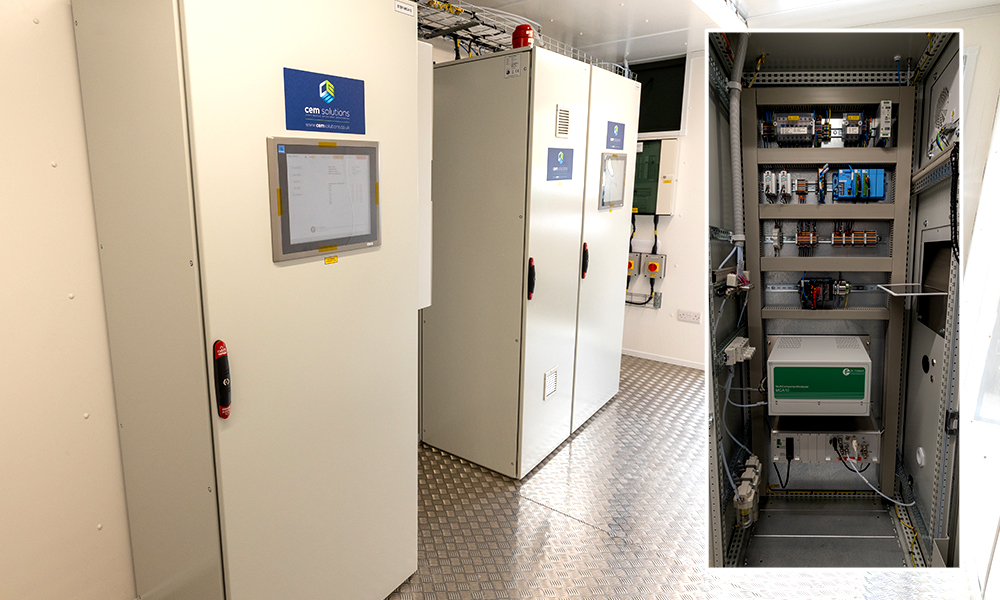
MCA 10 CEMS panel showing easy access to all system connections.

MCA 10
Extractive multi-component gas analyser system:
- Hot-wet gas analysis
- QAL1 & MCERTS according to EN 15267-3
- Approved for installations according to IED
- Max 11 infra-red components plus oxygen
- Low maintenance requirements
The applications of the MCA 10
- Power plants
- Refineries
- Cement industry
- Incinerators
- SWIP (Small Waste Incineration Processes)
- Glass industry
- Chemical industry
The benefits of the MCA 10
- Continuous, extractive measurement of up to twelve infrared components
- Hot Wet Measurement (no gas conditioning)
- Class-leading certified ranges
- Six-month service interval
- Simple system design
- Remote diagnosis
- First class price-performance ratio
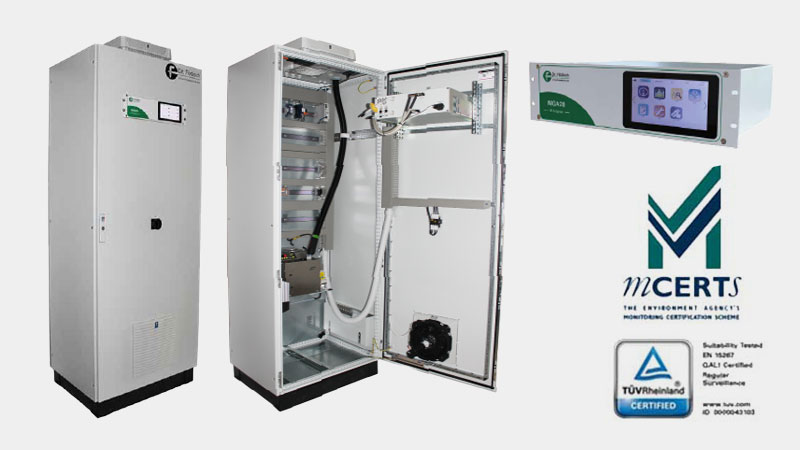
MGA 20
Flue Gas Pollutant Measurement & Process Control:
- Cold-Dry Gas Analysis
- QAL1 according to EN 15267-3
- Approved for installations according to IED
- Max 8 infra-red components plus oxygen
- Low maintenance requirements
The applications of the MGA 20
- Power plants
- Refineries
- Cement industry
- Incinerators
- SWIP (Small Waste Incineration Processes)
- Glass industry
- Chemical industry
The benefits of the MGA 20
- Continuous, measurement of up to eight infrared components using IR-Technology
- Cold Dry Measurement (no need for compressed air)
- Class-leading certified ranges
- Six-month service interval
- 7″ touchscreen colour display / app based menu
- Remote diagnosis
- First class price-performance ratio

MGA 12
Multi gas analyser for extractive gas component measurement:
- Cold-dry gas analysis
- QAL1 according to EN 15267-3
- Max. 5 components (from a selection of 9)
- Compensation for temperature, pressure and water cross sensitivities
- Low maintenance requirements
The applications of the MGA 12
- Power plants
- Industrial boilers
- Thermal oxidisers
- CHP plants
- Combustion optimisation
- Process control
The benefits of the MGA 12
- Analogue output for up to five gas components
- Local diagnosis of the system via the lamps on the external panel
- Flow control & display of flow rate
- Low maintenance
- First class price-performance ratio
Download the brochure for more information on this CMS MGA 12 system.
Related Products
Why choose CEM Solutions?
CEM Solutions was incorporated in 2012, and we specialise in providing business with a range of products and solutions to help meet their emission monitoring requirements.
We now have over 10 years experience in the industry and an ever-growing UK customer base. Our clients are at the core of the services we offer, and we ensure to provide a personal approach that is tailored to your business requirements.
CEM Solutions have a highly skilled team of engineers who are experts in their field and strive to help businesses comply with their emission monitoring regulations.
To discover more about us, or to get in touch with a member of our team, please contact us today with your query and we’ll be happy to assist you.
The benefits of CEM Solutions
Here at CEM Solutions, we have a passionate team that are here to help your business with emission monitoring requirements.
We have the ability to design and install our turnkey solutions which are custom built to your precise requirements. All of the products we use are MCERTS approved and certified. Additionally, we also have a partnership with Dr. Foedisch and are trusted UK suppliers of his industry leading products.
We will consult with you about your requirements, install the equipment and then configure these so they can accommodate your requirements. Additionally, we have 24-hour call-out support on site available should you require our assistance.