
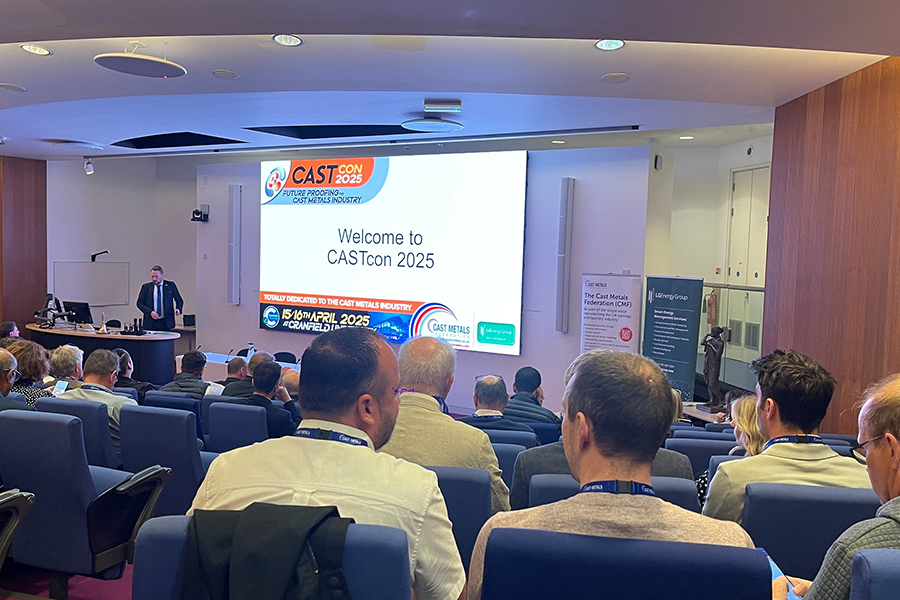
Cranfield University – 15th & 16th April 2025.
The afternoon before…
A very well organised event started with afternoon tours of the Cranfield University laboratories where delegates got to choose between seeing the latest in castings technology, 3D composite manufacture using advanced materials or, for those with more futuristic interests, the second tour saw the use of AI applications in asset management & condition monitoring – how virtual & augmented reality can be used for training and the creation of digital twins, where a piece of hardware is replicated in a digital form for diagnosis or long term stress testing.
Both tours ended with a look at the university inspired artwork exhibition by Ken Banks. Ken’s artwork captures interactions between people, objects, and the environment. See more of his work here – Projects – Ken Banks.
However, for some of us it wasn’t all fun, someone had to setup our exhibition stand!
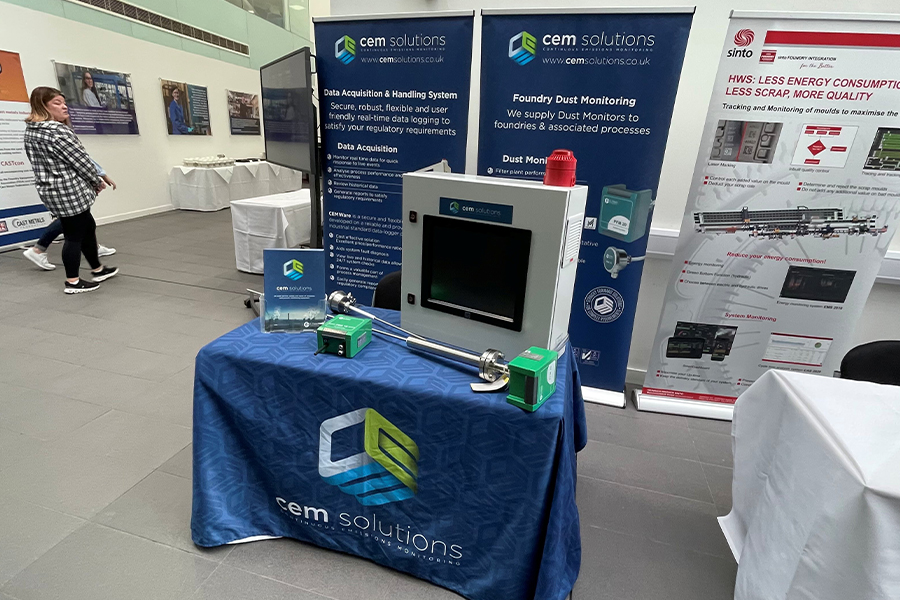
Showcasing our foundry dust monitoring solutions in the form of the Dr Foedisch PFM13 & PFM20 stack emissions monitors with the CEM solutions CEMWare reporting package.
Also on show was the fugitive emissions monitor FDS15 for monitoring ambient levels of PM2.5 and PM10 in the workplace.
A relaxed evening buffet followed a drinks reception sponsored by the Founders Company – Trade, Charity, Fellowship and interesting presentations from guest keynote speakers, including one on Digital skills, AI & the importance of data capture from Prof. John Erkoyuncu. There was a panel discussion led by Ex CEO of the CMF (Cast metals Federation) Pam Murrell on the future, threats and opportunities for the casting industry with Matthew Cawood, AMRC Casting, Rupert Sexton, Sylatech & Cameron Coyle from Voxeljet UK. We did not forget time to network and discuss these interesting topics with other members of the casting community.
Conference day!
Wednesday morning sessions began with a welcome address from the Chief Executive of the CMF, Simon Forrester with an overview of what was to come through the day. This year’s event security saw us being watched over by the world’s oldest aluminium statue in existence, cast in 1859 by French founder and metalworker, Paul Morin. A great chance to see this fantastic piece of history. More information on the statue can be found here.
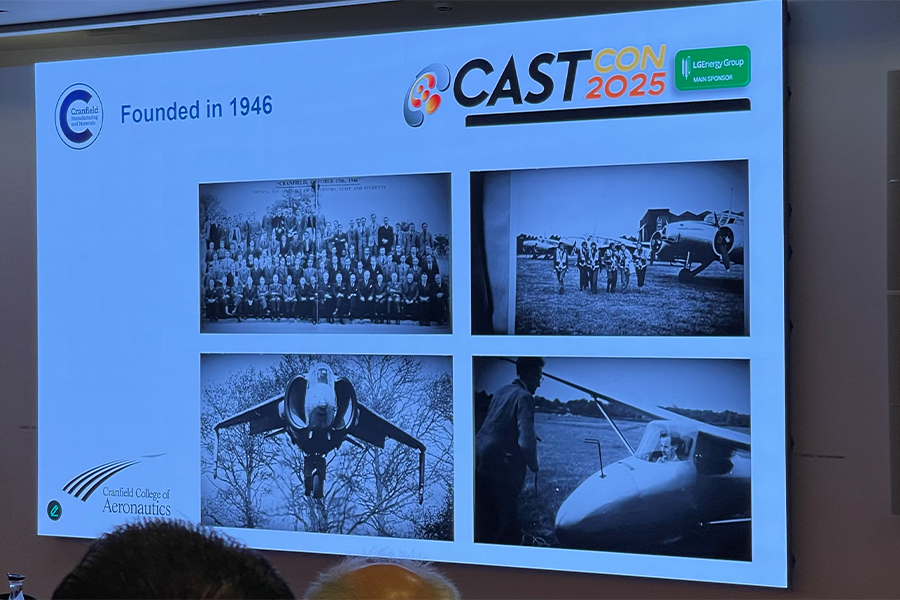
Prof. Mark Jolly gave a welcome presentation on the venue itself; some interesting facts about how Cranfield University ended up in Cranfield, its expanding facilities and famous former attendees – a former CEO of Aston Martin, a former CEO of ASDA and Nick Jenkins, founder of online greetings card retailer Moonpig and former “dragon” on the BBC Two business series Dragons’ Den to name a few! This was all overshadowed by the fact that the university airfield appeared in ‘Some Mothers do ‘ave em’, where an entire episode was filmed at the site and where Frank Spencer “learned to fly”…
Further Presentations
Will Robots take over?
In some places, for some tasks, yes, they already have! We had an Introduction to MTC, Manufacturing Technology Centre where robots are being used for a number of applications. In some cases such as conveyor loading and grinding, they have improved efficiency, reduced risk of injury and allowed companies to upskill team members to better positions within the factories. Another important factor is consistency, as using robots has minimised damage and breakages, resulting in less waste or re-work.
Or will it be China?
A presentation from Jose Javier Gonzalez, General Secretary of the World Foundry Organisation gave us an overview of the global casting and foundry situation. Although he is based in Spain, he had flown in directly from the USA where he had attended meetings with members of the organisation from many countries. It was said that with the tariffs imposed on China by the USA, China will be looking for alternative investments, possibly in UK & European based companies/countries. Could this be good for the sector or create further pressure on UK based companies already having to compete with Chinese prices?
Offshore Wind Farms
It was surprising to hear about the opportunities in offshore wind farms. Currently only 2% of materials supplied to this market comes from the UK. With an estimated potential to deliver £90 billion of value to the UK economy by 2040 and the Offshore Wind Growth Partnership offering support and funding, it’s got to be a future focus for UK foundries looking for growth opportunities.
Many of the wind turbines around the UK’s coastline are made in Denmark and towed into position by barge!
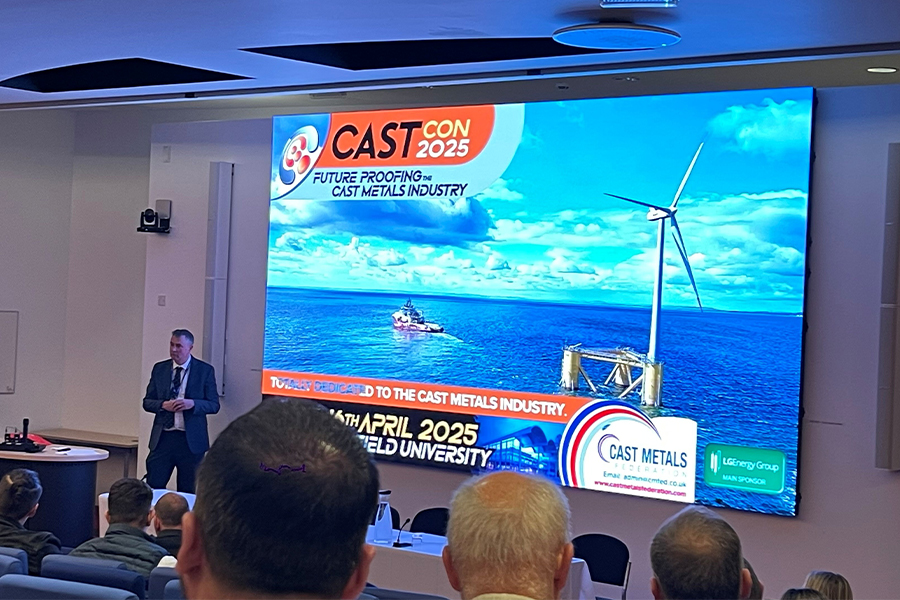
To end the morning sessions, talks on trends in supply and quality of raw materials led to a panel discussion on how to overcome the challenges that the UK supply chain faces; how working partnerships between the government and industry will protect the future growth of the UK’s metal industry.
A working lunch
Conference sponsors LG energy who have been supporting members of the Cast Metals Federation to reduce the exposure to changes in energy costs as consultants for energy strategies and carbon reporting, hosted 20 minute one to one “drop in sessions” for attendees to discuss the challenges they face when it comes to energy usage and costs.
Energy Usage
Staying on the energy topic, the afternoon sessions began with an interesting and eye-opening presentation on energy usage at CastAlum where Felix Martin from Warwick University presented his findings on CastAlum’s historic energy costs coupled with current operating flows to give a comprehensive picture of the plant’s energy usage. Identifying high energy usage on infrequently used equipment in casting stations was leading to immediate savings of over £30,000 / year. This study proved that unless you monitor, you cannot manage – there are huge annual savings to be made if you invest the time and recourse into the right areas of the business.
Dr Copper, Dr who? – I don’t think he’s a real doctor!
This is my first-time hearing about Dr Copper but apparently the price of copper is used as an indicator for general global trends; the higher the price, the better the future could be! I hadn’t really thought about it but the demand for copper in today’s markets is higher than ever. EV’s use up to 4 x more than a car with an engine, ~ 80kgs vs 20kgs, not to mention the amount required for the charging infrastructure! Then there’s wind turbines & solar panels – a large offshore turbine can contain up to 30 tonnes of copper.
You’ve heard of the “cloud” haven’t you? Well, your data isn’t really floating around in the sky – it’s in a data centre that needs lots of computer processing, huge power cables, electrical connectors as well as lots of cooling capacity – all containing copper!
So, if you want to know what the future holds, see Dr Copper.
My Key Takeaways
A greener future!
There is hope for the foundry sector, but maybe it means some change. Can we adapt to meet the current demands for aluminium and steel within the wind turbine market?
Is it really scrap?
Is the metals sector seen as wasteful? Is ‘scrap’ the wrong word to use when it means ‘material to be recycled’? 75% of aluminium manufactured continues to be in use today. According to the Aluminium Association, in industrial markets such as automotive and building, aluminium is recycled at rates of up to 90%.
Energy
Energy seems to be the biggest burden on the sector. Should the government be doing more to protect our foundries from the ever-increasing costs and negative effects it has on the UK metals industry?
Finally, a very well organised event – the venue, the topics and of course the people! A big thank you to all involved!
Blog by James Gilbert