With both finances and time invested in the plant, reliable operation and high levels of availability are often critical to ensure/optimise profitability thereafter.

CEM systems are a critical cog in the plant operation, as with any incineration process. However, with the high demands of the SWIP permit relative to the scale of project, the cost of the CEMS can present a significant percentage of the overall cost, therefore the prospect of standby systems is not normally viable and the reliability of the CEMS really is critical. Low operating and maintenance costs should also be factored in as these can often be overlooked, varying significantly between different technologies.

How should I select my Continuous Emissions Monitoring system?

We would always advocate speaking to existing plant owners that have previously trodden a similar path, preferably visiting at least 2 sites using different systems. Visit equipment suppliers and request demonstrations – As the operator of a small plant it is advantageous to be confident and comfortable operating the equipment you choose.

Consider both Capital Costs and Operating Costs.

Foundries

Capital Costs

Alongside initial equipment costs, the cost to install is effectively an ‘up front’ cost and so needs to be considered in parallel. Installation costs are directly affected by the type of system being installed, for example:

Integrated Components

Can all gaseous components be measured in a single device? This includes O2, NH3 & HCL. If so, this can reduce installation demands meaning:

  • No separate stack ports required for additional probes
  • No additional cabling for separate devices

FID

When certified in conjunction with the primary component gas analyser, this becomes an additional component on the MCERTs certificate, meaning:

  • No additional probe or sample line to achieve full EN15267-3 compliance

Integrated Ancillary Components

Can heated sample lines & probes can be powered and controlled directly by the CEM system? If so this means:

  • No separate controller
  • Full diagnostic visibility by CEMS’ HMI

Integrated Calibration Manifold

Is calibration hardware and control contained within the CEM Panel? If so, this means:

  • No external cabling wiring required
  • No external junction boxes / controllers
  • Full configurability by the CEMS’ HMI

Integrated Dust / Flow

Can dust and flow signals be integrated within the CEM Panel? If so, this means:

  • No separate (redundant) Displays
  • Signal input direct to Analyser PLC - reducing cable requirements
  • Access via CEMS' HMI

Embedded DAHS

  • No Separate cabling required (access via LAN)
  • All reports / alarms pre-configured

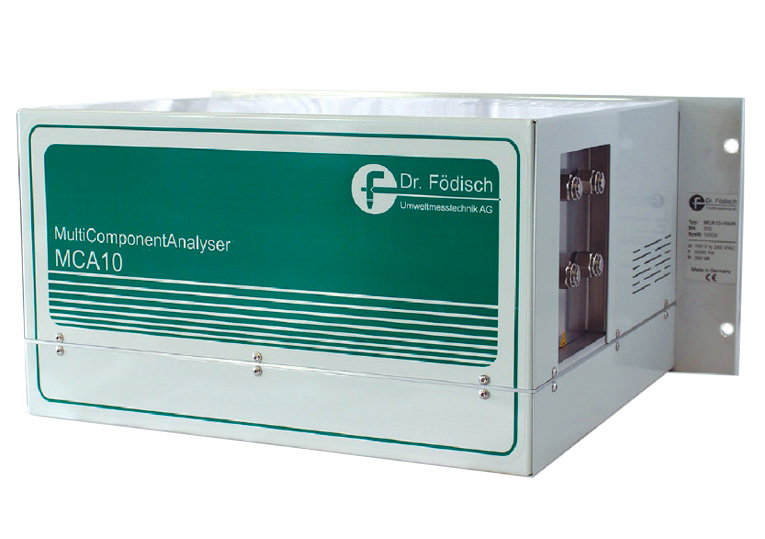
Our SWIP offering is a CEM system which utilises the Dr. Fodisch MCA 10 analyser. The combined efficient packaging of the above minimises installation requirements (and costs) and simplifies the overall solution, making it as accessible as possible to the end user.

Operating Costs

Reliability

The CEMS of yesteryear may at times have had a reputation for unreliability. The norm now is to run between maintenance visits (six monthly for the MCA10) without the need for intervention / visits from the equipment supplier. Of course, breakdowns can happen and in that event, by stocking comprehensive spares, we are able to respond quickly and provide confidence of restoration of measurement.

Maintenance Frequency

Maintenance and calibration frequency can vary significantly across different manufacturers. With a 6-month interval for all components (maintenance and calibration), the MCA10 is as low on demands as it gets. Furthermore, by using an air-inductor (probe filter aside) consumables are minimal.

Gas

Some systems use N2 for the zero-point calibration. The MCA10 uses instrument air which can significantly reduce costs. Where possible, strategies can be adopted to minimise calibration gas consumption on site to both be compliant with EN14181 and to reduce operating costs even further.

Can we ensure our CEM system meets the needs of your individual SWIP?

Not all SWIPs are equal and derogation may be provided for certain measurements such as HCL, HF and SO2 Permits* will also be subject to regular review, therefore additional measurements could be added or removed at some point in the future. Our SWIP CEM system has been designed to be flexible, both to accommodate the range of measurements required at the outset but also to factor in potential upgrades with future changes or requirements. The panel is IP54 rated with gas analysis components supplied from a leading German manufacturer. We offer packages with MCERT / TUV certification.

To request any further information on our system or to discuss your application in more detail please get in touch via our contact form.

*Unless excluded, a SWIP needs an environmental permit issued by the local authority. The permit must be issued in line with schedule 13A of the Environmental Permitting Regulations and must reflect the requirements of article 44 of the Industrial Emissions Directive. (Ref. DEFRA Environmental Permitting Guidance: waste incineration 22 December 2015).

Photoionization Detectors

MCA10 Multi-Gas Analyser

  • Power plants
  • Waste Incineration plants
  • Refineries
  • Cement industry
  • Industrial exhaust air
  • Paper mills
  • Glass industry
  • Chemical industry

View the MCA10 here.

Photoionization Detectors

PFM 20

  • Suitable for Environment Agency Part A(2) permitted sites

  • QAL1 / MCERTS approved qualitative dust measurement
    with lowest certified range 0-7.5 in mg/m3, Modbus 485, analog and digital outputs, connectivity for external display and operation unit.

    View our PFM20 here.

Why choose CEM Solutions?

CEM Solutions was incorporated in 2012, and we specialise in providing business with a range of products and solutions to help meet their emission monitoring requirements.

We now have over 10 years experience in the industry and an ever-growing UK customer base. Our clients are at the core of the services we offer, and we ensure to provide a personal approach that is tailored to your business requirements.

CEM Solutions have a highly skilled team of engineers who are experts in their field and strive to help businesses comply with their emission monitoring regulations.

To discover more about us, or to get in touch with a member of our team, please contact us today with your query and we’ll be happy to assist you.


The benefits of CEM Solutions

Here at CEM Solutions, we have a passionate team that are here to help your business with emission monitoring requirements.

We have the ability to design, manufacture and install  turnkey solutions  from our UK production facility. These are custom built to your precise requirements. All of the products we use are MCERTS approved and certified. We work closely with trusted suppliers of industry leading products, such as ABB UK & Fuji.

We service & calibrate CEMS throughout the UK within a variety of maintenance contracts, arranged at intervals to comply (as a minimum) with manufacturers’ recommendations and MCERTS certified intervals, typically biannually or quarterly. These contracts can include 24-hour phone support and next day call-out if required.

Contact Us Call: 01629 734 963
Contact Us Call Us